Street-Food Walk, Market Tasting, Cooking Class or Evening Wine Tour: Which Palermo Food Tour
Four genuinely different formats share the phrase “food tour” in this city, and they differ in how much you walk, how much you eat and whether you cook. Picking by price sorts them badly; picking by format sorts them in a minute.
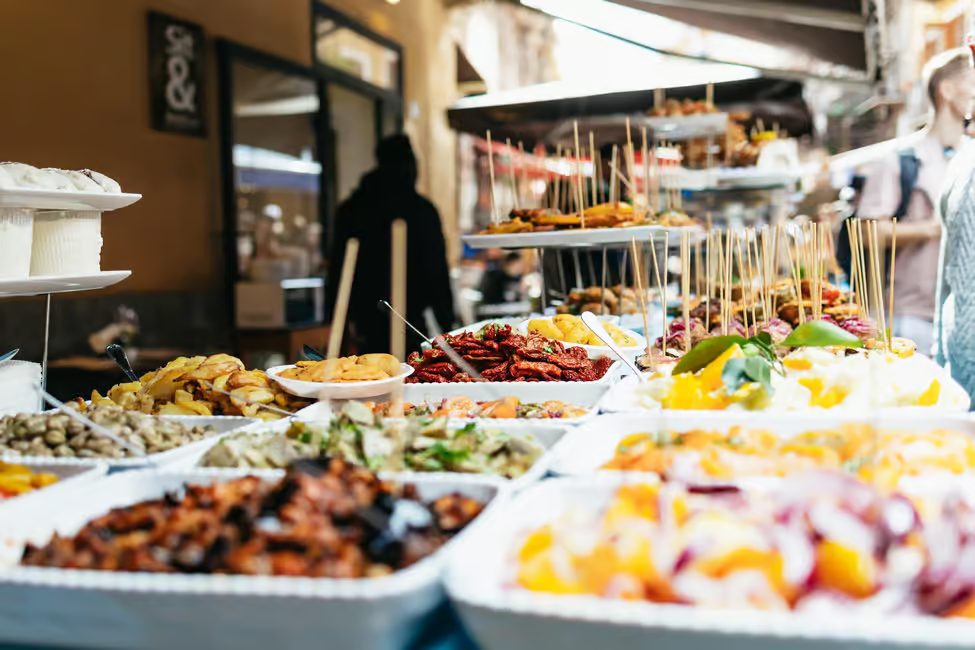
In this guide
Four formats, one phrase
Palermo has one of the oldest street-food cultures in Europe and a tour market that reflects it. What confuses visitors is that four quite different products all get listed as “food tours”.
A street-food walk moves through the old quarters stopping at friggitorie and stalls. A market tasting tour anchors itself in one or two of the historic markets. A cooking class takes you shopping and then into a kitchen. An evening food and wine tour sits down more and drinks more.
They range from $40 to $251, they run two and a half to five hours, and the difference between them is not quality. It is how you spend the time and how much of it you spend standing up.
The street-food walk
The core product and the one most people should book. Two and a half to three hours on foot through the historic centre, stopping at six or so places, eating standing up as Palermitani do.
What you eat is the canon: pane e panelle, chickpea fritters in a roll; arancine, the fried rice balls that Palermo insists are feminine and Catania insists are not; sfincione, the thick focaccia-like pizza with onion and anchovy; something from the more adventurous end, often pani ca meusa; and cannoli filled to order at the end.
$43 to $78 depending on group size and how many tastings are included. Three hours, several kilometres of walking, and you will not want dinner.
The market tasting tour
Similar food, different structure. These anchor on one or two of the historic markets — Ballarò, the Vucciria, the Capo — and spend longer in each place.
What that buys is context. A market tour explains what you are looking at: the fish counters and what is in season, the vegetable stalls, the cheese and the spice sellers, and the Arab-Norman trading history that produced a Sicilian market that looks more like a souk than like an Italian one.
Less walking, more standing and talking, and generally more interaction with vendors. $74 to $88, three to three and a half hours.
The cooking class
A different day entirely, and the longest of the formats.
Typically a market visit to buy ingredients, then several hours in a kitchen making a Sicilian meal — often pasta, often something with aubergine, usually cannoli — and then eating what you made, with wine.
Five hours at $70 for the market-plus-kitchen version, and up to $138 for a class in a villa with a view over the city. That upper end is a half-day out rather than a cooking lesson with a view attached.
It suits people who want to take something home beyond photographs, and it is the format that works best in bad weather, since most of it is indoors.
The evening food and wine tour
The format that most resembles dinner, and it is priced accordingly at $78 to $103.
Three to four hours after dark, with more seated stops, more wine and a slower pace. The city changes at night — the markets close and the same streets fill with people drinking outside — and an evening tour is the only format that shows you that.
For couples and for anyone who finds a three-hour daytime walk in Sicilian heat unappealing, this is often the better booking. It genuinely replaces dinner, which the daytime walks also do but less obviously.
And the history hybrids
Worth a section because they are distinctive to this city and easy to misread.
Several listings pair street food with the history of the mafia and the anti-mafia movement, and they are not novelty products. Palermo has a serious civic story here — the Addiopizzo movement of businesses refusing protection payments, the assassinations of Falcone and Borsellino in 1992, and the way the city has processed all of it — and a good guide handles it with the seriousness it deserves.
At $40 to $77 these are among the cheaper listings, and the food content varies. Read the itinerary: some are walking-history tours with tastings attached, others are food tours with the history woven through.
The formats, compared
| Format | From | Length | Walking | Sitting | Best for |
|---|---|---|---|---|---|
| Street-food walk | $43–$78 | 2.5–3 hrs | Several km | Almost none | A first visit; eating the canon properly |
| Market tasting | $74–$88 | 3–3.5 hrs | Moderate | Some | Understanding what you are eating |
| Cooking class | $70–$138 | 4–5 hrs | A market visit | Most of it | Taking something home; bad weather |
| Evening food and wine | $78–$103 | 3–3.5 hrs | Moderate | Substantial | Couples; heat avoidance; a real dinner |
| Food and history hybrid | $40–$77 | 2.5–3 hrs | Several km | Little | Readers who want the city’s civic story too |
| Winery day trip | $251 | 4 hrs | Little | Most of it | A different day — not a Palermo food tour |
The last row is in the table because it appears in Palermo food searches. It is a trip out to a Sicilian winery, and it is not a tour of this city.
How much do you actually eat?
More than you expect, on every format, and this is the single most useful practical fact here.
A three-hour street-food tour with six stops is not six snacks. It is six substantial tastings, several of them fried, and by the fifth most groups have slowed considerably. The good guides pace it and warn you at the start; the reviews of the weaker ones are full of people saying they could not finish.
- Do not eat lunch before an afternoon tour. A light breakfast is the right preparation.
- Do not book dinner after an evening tour. It replaces the meal, comprehensively.
- Pace yourself at the start. The first two stops are the smallest and the last three are not.
- Say if you cannot manage a stop. Guides would far rather you skipped one than struggled through all six.
The listings that state tasting counts — “10+ tastings” on one of them — are being helpful rather than boastful. Take the number seriously.
Which format suits which traveller
First time in Palermo, two or three days
A street-food walk on the first afternoon. It orients you in the old quarters, feeds you properly and tells you where to go back to for the rest of the trip.
You cook, and you want to keep something
The cooking class with the market visit at $70. Five hours, a meal you made, and a set of techniques that travel home.
Travelling as a couple, or the heat is a problem
An evening food and wine tour. Slower, cooler, more seated, and it shows you a city that daytime tours do not.
You want to understand the city, not just eat in it
A market tour or one of the history hybrids. Palermo has more layers than most Italian cities and the food is a way into them rather than the whole point.
What should a first-timer book?
The street-food walk, on the first full day, in the afternoon.
Three reasons. It covers the food canon in one go, so nothing else you eat that week is a mystery. It walks you through the Vucciria, the Capo and the streets between them, which is the geography you need. And it ends around six, which leaves the evening free and means you will not want dinner anyway.
Book a small-group version if the price gap is small. At six or eight people a guide can answer questions at every stop; at twenty they are managing a queue.
Then, with the canon behind you, a market tour or a cooking class later in the trip lands much better than it would have on day one.
Three ways this goes wrong
- Booking a food tour for the same day as a big lunch. These are meals. Six substantial tastings is dinner, and a large lunch before it wastes both.
- Assuming the winery day trip is a Palermo food tour. It is a four-hour excursion out of the city to a winery, and it is a good day — just not this one.
- Leaving the food tour to the last day. It works best early, because it tells you where to eat for the rest of the trip.
The short verdict
Street-food walk first, ideally on your first full afternoon, in the smallest group you can find. It is the format the city is built for and it makes everything you eat afterwards make more sense.
Add a cooking class if you cook, a market tour if you want the trading history, or an evening wine tour if the heat or the pace of a daytime walk does not appeal.
And come hungry. Every one of these formats feeds you more than the word “tasting” suggests, and that is the most common surprise in the reviews.
Common questions
What is the difference between a street-food walk and a market tour?
How much food is on a Palermo food tour?
Is a cooking class better than a walking tour?
Are the mafia history tours serious?
Which format is best in hot weather?
What should I book first in Palermo?
Where to go next
- Three hours, six stops — what the format you picked actually contains
- What a food tour costs — the $40 to $251 spread, itemised
- The markets — Ballarò, the Vucciria and the Capo, in detail
- Where to eat — the places to go back to afterwards
- Compare Palermo food tours — every walk, market and cooking class, side by side
Tours that fit this trip
Chosen to match what this guide covers, not for what sells.
Palermo: Street Food and History Walking Tour
The street-food walk this guide recommends first: three hours, the food canon, and the history woven through it.
From $55 per person
Check Availability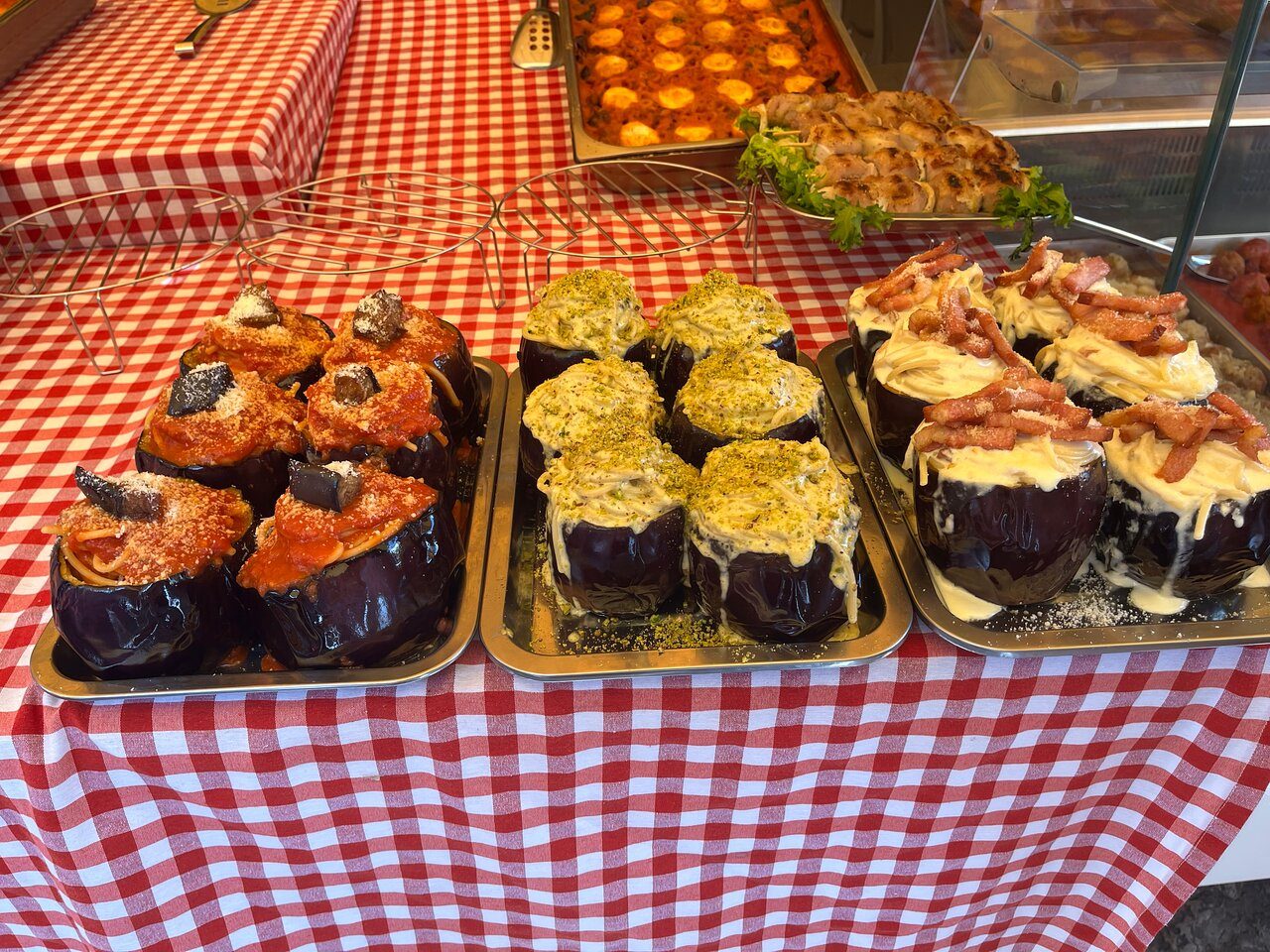
Wanna be Sicilian: Palermo Cooking Class and Market Tour
The cooking class with a market visit at $70 — five hours, a meal you made, and techniques that travel home.
From $69 per person
Check Availability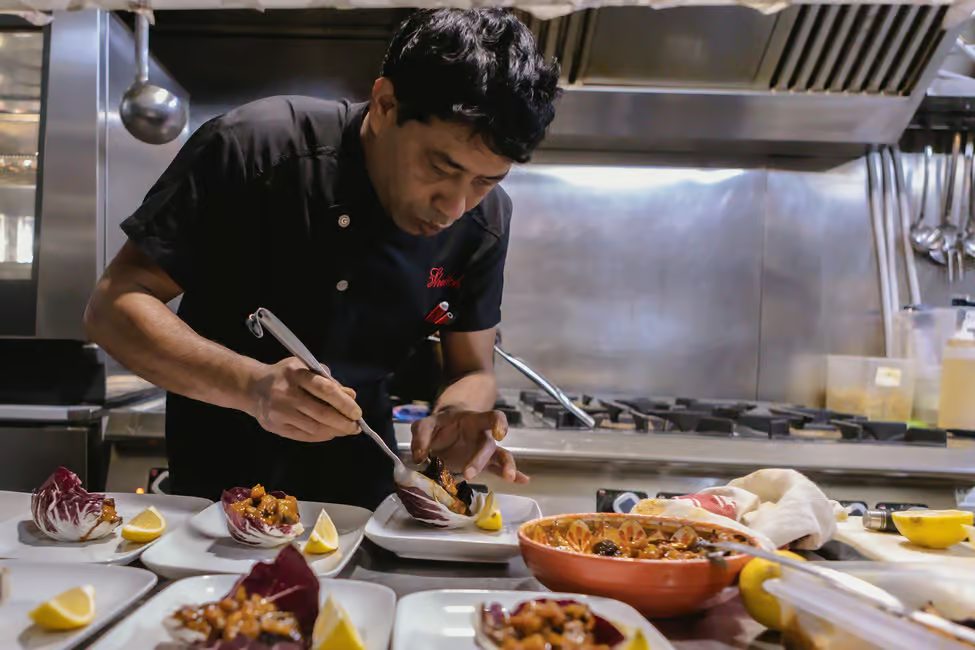
Eating Palermo: Evening Food & Wine Small Group Tour
The evening food and wine format, slower and more seated, and the only one that shows you the city after dark.
From $97 per person
Check Availability