Before You Pay for a Palermo Food Tour: Group Size, Language and Dietary Needs
The Palermo food tours worth booking are separated from the rest by five things, none of which is the price. All five are answerable from the listing or a message to the operator, and all five are easier to settle now than on the pavement at stop three.
In this guide
- Five things to settle
- Group size, and why it decides the tour
- What language is the tour in?
- Dietary needs
- Do you need cash?
- Cancellation and weather
- What to check, and where
- How to read a guide from a listing
- Local operator or international brand?
- Which start time to pick
- Booking with children
- The short verdict
Five things to settle
Palermo has one of the denser food-tour markets in Europe and the listings look interchangeable. They are not, and the differences are in the operational detail rather than the itinerary.
Five things separate a tour you will remember from one you will merely have done: how many people, what language, what happens if you do not eat something, whether you need cash, and what happens if you cannot come.
None of them is exotic. All of them are settled before payment on a well-written listing, and where one is silent, a message to the operator gets an answer within a day.
Group size, and why it decides the tour
The single most consequential variable, and it is published on nearly every listing.
At six to eight people a guide can hold a conversation, answer a question at every stop, and introduce you to the vendor. At twenty they are managing a queue, working from a script, and repeating themselves at the back of the group.
That matters more on a food tour than on most formats, because the stops are counters and doorways rather than open squares. Twenty people in a friggitoria is a scrum; eight is a group of customers.
The price gap is real but not large: small-group listings here sit around $55 to $88 against $40 to $45 for the larger ones. For a three-hour tour that difference buys the whole difference in experience.
What language is the tour in?
English on all the listings compared here, and the question worth asking is a subtler one: is the guide a local speaking excellent English, or a non-local speaking it natively?
Both work. What a Palermitano guide brings is the vendor relationships — the counters where the tour is genuinely welcome rather than merely tolerated — and a first-hand account of how the city has changed. What a native English speaker brings is fluency and, often, a foreigner’s eye for what needs explaining.
The reviews tell you which you are getting. Guides are named in a striking proportion of Palermo food-tour reviews, and that consistency is itself a signal: an operator whose guides are named repeatedly is an operator with settled staff.
If you need another language, ask before booking. Several operators run Italian, Spanish and French departures that are not always visible in an English listing.
Dietary needs
Entirely workable, and it has to be arranged in advance rather than on the day.
Vegetarian is straightforward here. Panelle, crocchè, sfincione, market cheeses, and cannoli are all meat-free, and a vegetarian Palermo food tour is a full tour rather than a reduced one. The stop that changes is the spleen sandwich, which was always optional.
Gluten-free is harder and not impossible. The canon is bread-heavy — panelle in a roll, arancine, sfincione, cannoli shells — so a genuinely coeliac guest needs an operator who has planned substitutions, and some have and some have not. Ask directly.
Vegan is the most constrained. It is doable with notice on some tours and thin on others, and it is worth a message rather than a booking note.
Allergies should always be raised with the operator directly, in writing, before you pay. A booking note in a platform field is not the same as a conversation with the person who will hand you the food.
Do you need cash?
Generally not for the tour itself, which is paid online, and often yes for what happens around it.
The tastings are included where the inclusions say so, and on the reputable operators they are. What is not included is anything extra you decide to buy — a second cannolo, something from a market stall, a bottle of wine to take away — and Palermo’s markets and friggitorie are cash businesses.
Twenty or thirty euro in small notes covers it comfortably. Tipping the guide is customary in this market and appreciated rather than expected.
Cancellation and weather
Free cancellation up to 24 hours before is standard across the listings compared here, and it is worth confirming rather than assuming.
Weather rarely cancels a Palermo food tour. The stops are counters, doorways and covered markets, and a wet afternoon is a slightly damper version of the same walk rather than a lost one. Operators run in rain and the reviews from wet days are much like the others.
What does move things is the calendar. Public holidays, the Festino in July and August closures can change which stops are open, and a good operator reroutes rather than cancels. If your date is near one of those, a message asking what the route will be is worth sending.
What to check, and where
| What to check | Where to find it | Why it matters |
|---|---|---|
| Group cap | The listing, usually stated | Predicts your experience better than anything else |
| Number of tastings | The listing or the itinerary | Tells you whether it replaces dinner |
| What is included to drink | The inclusions | Varies more than the food does |
| Language and guide | The reviews, where guides are named | Named guides mean settled staff |
| Dietary substitutions | Message the operator | Vegetarian is easy, gluten-free is not automatic |
| Meeting point | The confirmation | Palermo’s old centre defeats mapping apps |
| Cancellation window | The listing terms | Standard is 24 hours; confirm it |
Five minutes with that list before booking is worth more than an hour of comparing prices.
How to read a guide from a listing
Three signals, and they are more reliable than the star rating.
Named guides in the reviews. Palermo food-tour reviews name guides constantly, and an operator whose guides are named repeatedly across months has staff who stay. That is the strongest single predictor of a good tour here.
Specificity in the itinerary. A listing that names the stops and the dishes has a route; one that says “traditional Sicilian specialities” may still be excellent and has told you nothing.
Honesty about quantity. The listings that say “10+ tastings” or “come hungry” are managing expectations correctly, and it is a small sign of an operator who thinks about the guest experience rather than the sale.
Local operator or international brand?
Both are represented here and both are good, in different ways.
The international food-tour brands bring consistency: a tested route, trained guides, reliable logistics and a complaints process. If you have had a good experience with one of them in another city, that transfers.
The local operators bring relationships. A Palermitano running tours in their own city for years has counters where they are family, and it shows in what gets brought out.
The honest position is that at the top of this market you cannot tell them apart on quality, and the choice comes down to group size and price. At the bottom, a local operator with fifty five-star reviews is a safer bet than an unknown brand at the same price.
Which start time to pick
Late afternoon for a first tour, evening for a second, and morning if the markets are the point.
A four or five o’clock start finishes around seven, which is when Palermo comes out. You end the tour in a city that is waking up rather than one that is closing, and the food has replaced dinner so the evening is free.
A morning tour catches the markets at their most working — Ballarò and the Capo at eight or nine are properly busy and mostly local — but the friggitorie are quieter and the day is hotter by the time you finish.
Evening tours are their own thing and the best choice in July and August, when a three-hour afternoon walk in this city is genuinely hard work.
Booking with children
Better than most people expect, with two caveats.
Palermo street food is child-friendly in a way that a tasting menu is not: fried things in bread, rice balls, pizza-adjacent focaccia and pastry are exactly what most children want to eat. Arancine in particular land well.
The caveats are the walking and the length. Three hours on cobbles with six stops is a long afternoon for a young child, and some operators set minimum ages. Check, and consider a shorter tour or a cooking class, which is seated and has a task in it.
Alcohol on the daytime walks is incidental rather than central, so a family booking is not awkward. The evening wine tours are a different matter and are generally adult products.
The short verdict
Check the group cap first. Six to eight is the number, and it predicts your afternoon better than price, rating or itinerary.
Message the operator about dietary needs before paying rather than noting them in a booking field, and read the reviews for named guides — both take five minutes and both change the odds.
Then carry twenty or thirty euro in cash, come hungry, wear closed shoes and book nothing for the evening. That is the whole preparation, and it is enough.
Common questions
What group size should I look for on a Palermo food tour?
Can vegetarians and vegans do a Palermo food tour?
Do I need cash on a Palermo food tour?
Does rain cancel a Palermo food tour?
How do I tell a good guide from a listing?
What time should I book?
Where to go next
- What a food tour costs — what the group-cap premium actually buys
- Three hours, six stops — what you are booking, in detail
- Questions answered — inclusions, timings and dietary needs
- The markets — where the middle of your tour happens
- Compare Palermo food tours — every walk, market and cooking class, side by side
Tours that fit this trip
Chosen to match what this guide covers, not for what sells.
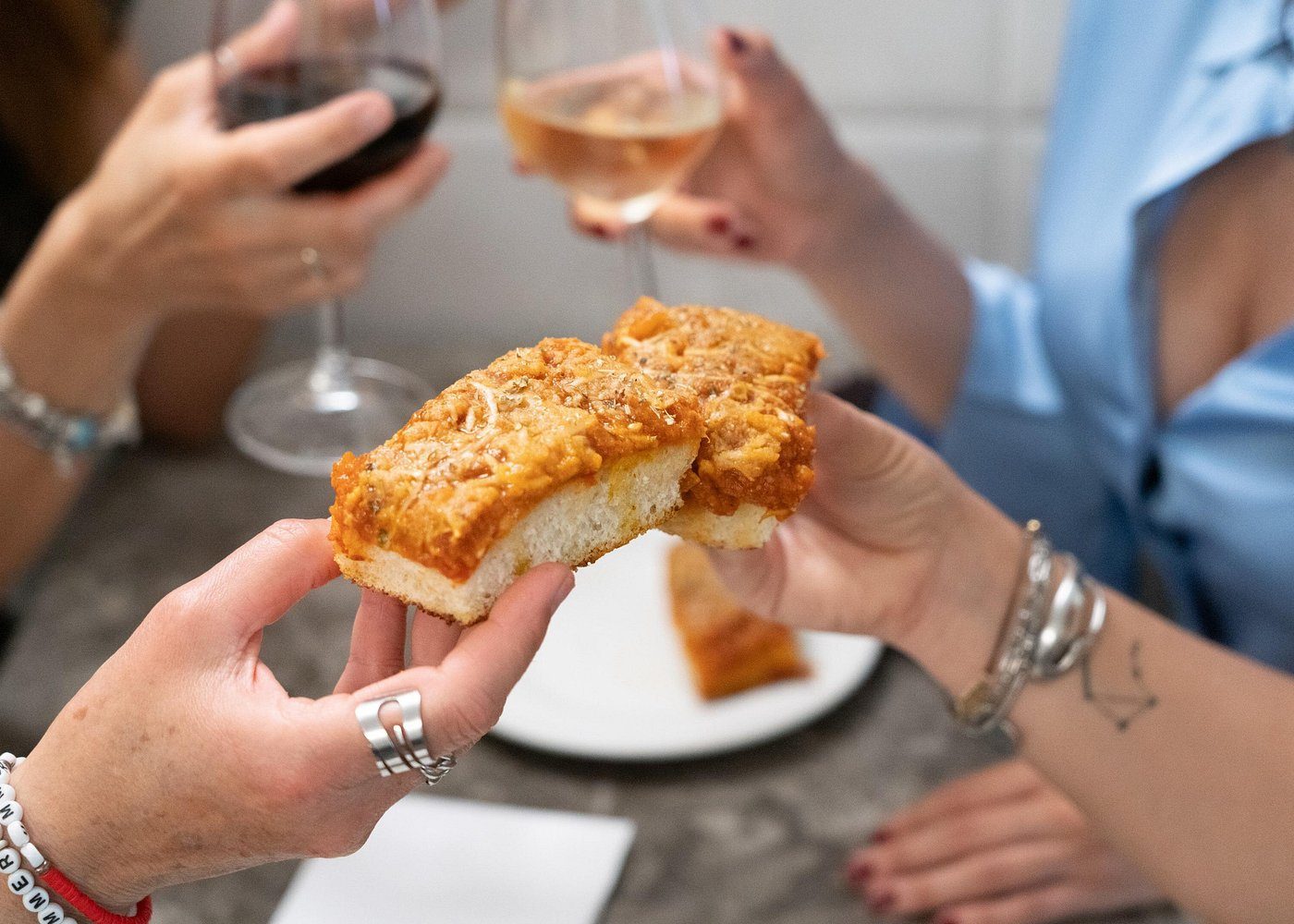
Palermo Sicilian Street Food Tour: Small Group by Do Eat Better
A small-group tour at the lower end of the price range, which is the combination this guide argues is worth looking for.
From $43 per person
Check Availability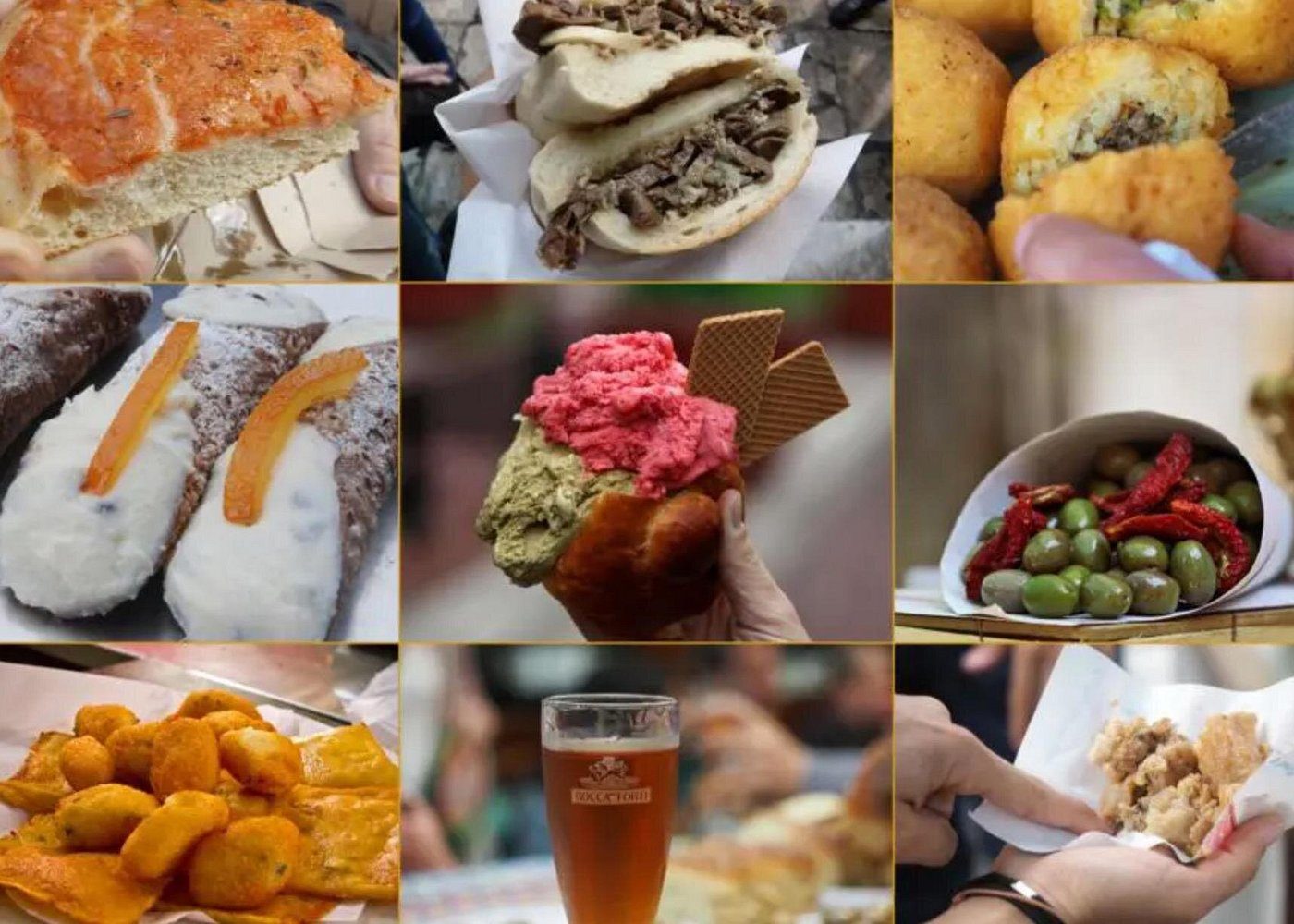
The Original Palermo Street Food & Market Tour - by Streaty
A long-running local operator with a named-guide reputation — the signal that matters most when comparing listings.
From $81 per person
Check Availability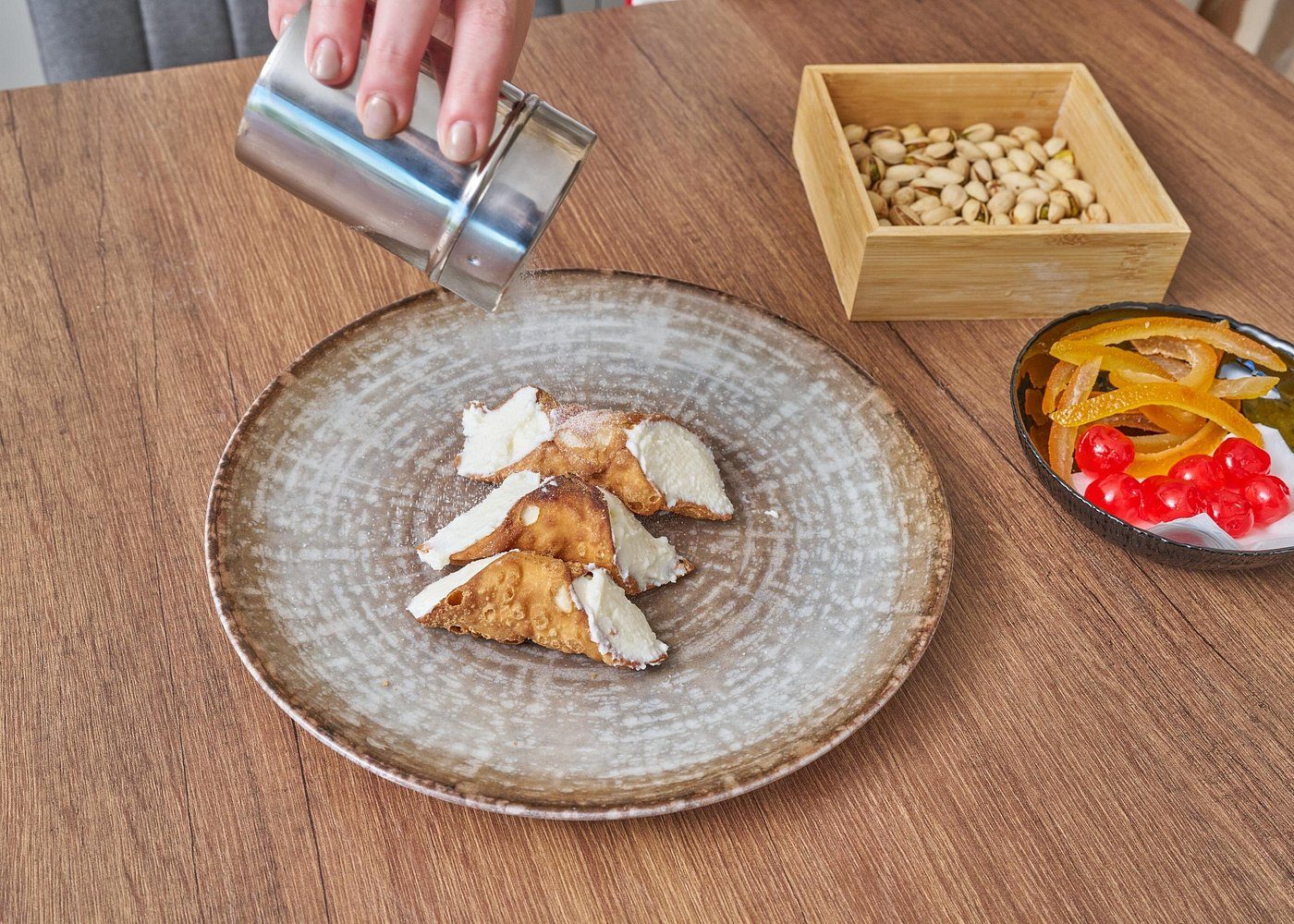
Cooking class in a villa with Palermo view
A seated cooking class in a villa, which is the alternative for a family or a group where three hours on cobbles is the constraint.
From $137 per person
Check Availability