$40 to $251: What You Get for the Price of a Palermo Food Tour
Six times the price in one city, for products that all involve eating. The spread makes sense the moment you separate what is being sold — a walk, a class, a dinner or a day out — and then look at the group cap.
In this guide
Sort by format first
Ranking these listings by price puts a three-hour walking tour next to a four-hour winery excursion and tells you nothing.
Sorted by format the range makes sense immediately: street-food walks $40 to $78, market tours $74 to $88, evening food and wine $78 to $103, cooking classes $70 to $138, and a winery day trip at $251 that is a different outing entirely.
Inside each of those bands the variation is small and it is almost entirely group size. Between the bands, you are buying a different kind of afternoon.
The four line items
- Group cap. The dominant driver inside every format. A guide costs the same whether six people or twenty are with them.
- Food and drink actually served. Six tastings against ten-plus, water only against wine at every stop.
- Duration. Two and a half hours against five, which is what separates a walk from a cooking class.
- Whether you make something. A kitchen, ingredients and a chef’s time is a different cost base from a walking route.
What barely moves the price: the itinerary. Almost every street-food tour visits similar stops eating similar things, because the canon is the canon.
The tiers, priced out
| Format | Range | Length | Group | What the money buys |
|---|---|---|---|---|
| Street-food walk, larger group | $40–$45 | 2.5–3 hrs | Larger | The canon, a guide, and a bigger group at the counters |
| Street-food walk, small group | $55–$78 | 3 hrs | Small | The same route with room to ask questions |
| Market tasting tour | $74–$88 | 3–3.5 hrs | Small | Longer in the markets and more context |
| Evening food and wine | $78–$103 | 3–3.5 hrs | Small | Seated stops, more wine, the city after dark |
| Cooking class with market | $70–$138 | 4–5 hrs | Small | A kitchen, a chef, a meal you made |
| Winery day trip | $251 | 4 hrs | Small | A different outing — transport out of the city and a tasting |
The tightest band is the street-food walk, and the gap inside it — $40 to $78 — is almost entirely the number of people beside you.
What the group cap costs
Roughly thirty dollars, and it is the best-spent thirty dollars here.
A $43 large-group street-food walk and a $74 small-group one visit similar places and eat similar things. What changes is whether the guide is leading a conversation or a queue, and at counters and doorways that is the whole experience.
The arithmetic from the operator’s side is simple: a guide for three hours costs the same either way, so the per-head price moves inversely with the cap. Nothing is being padded.
| Group | Typical price | What it feels like at a counter |
|---|---|---|
| 6–8 | $55–$88 | You meet the vendor; questions answered at each stop |
| 10–14 | $45–$78 | Manageable; the guide repeats themselves |
| 18–25 | $40–$45 | A queue at a doorway; a script, and the back of the group |
For a three-hour tour in a city built for the small version, this is where to spend.
Is a tasting count a price signal?
Weakly, and it is a better honesty signal than a price signal.
The $88 listing that states “10+ tastings” and a $55 one that describes six stops are not necessarily far apart in food. A stop can be a tasting or three, and operators count differently.
What a stated number does tell you is that the operator has thought about managing expectations, which correlates with the tours people rate highly. “Come hungry” is more useful than “traditional Sicilian specialities”.
What drinks add
Ten to twenty-five dollars, and it is the least visible variation between similar listings.
Some daytime street-food tours include a beer with the fried food and a glass of wine at the market; others include water and nothing else. Both approaches are legitimate and only one of them is obvious from the price.
The evening food and wine tours at $78 to $103 are built around the drinking, and there the wine is most of the premium over a daytime walk of the same length. If you were going to drink anyway, that is fair value; if you were not, an afternoon tour delivers the same food for less.
Why cooking classes cost more
A kitchen and five hours, and the maths is straightforward.
The $70 class with a market visit is genuinely good value: five hours, ingredients, a chef’s time, a kitchen and the meal you made, at fourteen dollars an hour. A three-hour walking tour at $55 works out at eighteen an hour.
The $138 class in a villa with a view over the city is a different proposition — a location premium on top of the same activity. Whether a view is worth sixty-eight dollars is a personal question; the cooking is comparable.
What a class gives you that no walk does is transferable: you leave able to make something. For travellers who cook, that is the best return available here.
The $251 outlier
A four-hour trip out of Palermo to a Sicilian winery with a tasting, and it is not a Palermo food tour.
It appears in these searches because it starts in Palermo, and it is a good day if a winery day is what you want. Sicilian wine deserves the attention — Nero d’Avola, Grillo, and the Etna appellations which are among the most interesting in Italy.
What it is not is an alternative to a street-food tour. It costs six times as much because it includes transport out of the city and a tasting at a producer, and it tells you nothing about how Palermo eats.
Book it as a second or third day, not as your food-tour choice.
What the $40 tier gives up
Space at the counter, and not much else.
The cheapest street-food walks here rate as highly as the dearest ones. The route is similar, the dishes are the canon, and the guides are frequently named and praised in the reviews just as they are on the small-group listings.
- Kept: the full food canon, a guide, three hours, and the geography of the old quarters.
- Given up: room at the counters, the chance to ask at every stop, and the vendor introductions.
- Watch for: what is included to drink, which is where the cheaper listings economise.
- Verdict: genuinely good value, and the thirty dollars to a small group is the best upgrade available here.
The costs that are not in the price
| Item | Roughly | Included? |
|---|---|---|
| Anything extra you buy | Cash, at the counter | No — and the markets are cash businesses |
| A tip for the guide | Customary, not expected | No |
| Drinks beyond what is listed | €3–6 each | Depends on the listing |
| Dinner | €0 | The tour replaces it — do not book a table |
| Comfortable shoes | Bring them | The most repeated advice in the reviews |
The fourth row is a saving rather than a cost, and it is worth counting: a food tour that replaces dinner is thirty or forty euro of restaurant you do not spend.
Where the value actually sits
Three observations.
First, the $70 cooking class is the best value per hour in the range at about fourteen dollars an hour, including ingredients and a meal.
Second, the thirty-dollar step from a large group to a small one is the best-value decision, because it changes the experience at every stop rather than adding anything to it.
Third, every one of these formats replaces dinner, which means the real cost of a $55 tour is $55 minus the meal you would otherwise have bought. Nobody prices it that way and it is the honest comparison.
Picking your tier in one minute
- First food tour, want the canon: a small-group street-food walk at $55 to $78.
- Budget matters: the $40 to $45 tier. Same food, bigger group, and it rates just as well.
- You cook: the $70 class with a market visit. Best value per hour here, and you take it home.
- Couples, or hot weather: an evening food and wine tour at $78 to $103.
- Comparing two similar walks: check the group cap and what is included to drink. Those are the two differences.
- The winery day: a good outing, and a separate one. Do not book it instead of a food tour.
Common questions
Why do Palermo food tours range from $40 to $251?
Is a small-group tour worth the extra?
Does a higher tasting count mean better value?
Why are cooking classes cheaper per hour?
Is the $251 winery tour a Palermo food tour?
What is not included in the price?
Where to go next
- Before you pay — the group cap, and the four other things to check
- Which format — the decision that comes before price
- What travellers said — the ratings behind these tiers
- Questions answered — inclusions, timings and dietary needs
- Compare Palermo food tours — every walk, market and cooking class, side by side
Tours that fit this trip
Chosen to match what this guide covers, not for what sells.
Palermo No Mafia walking tour: discover the Anti-mafia culture in Sicily
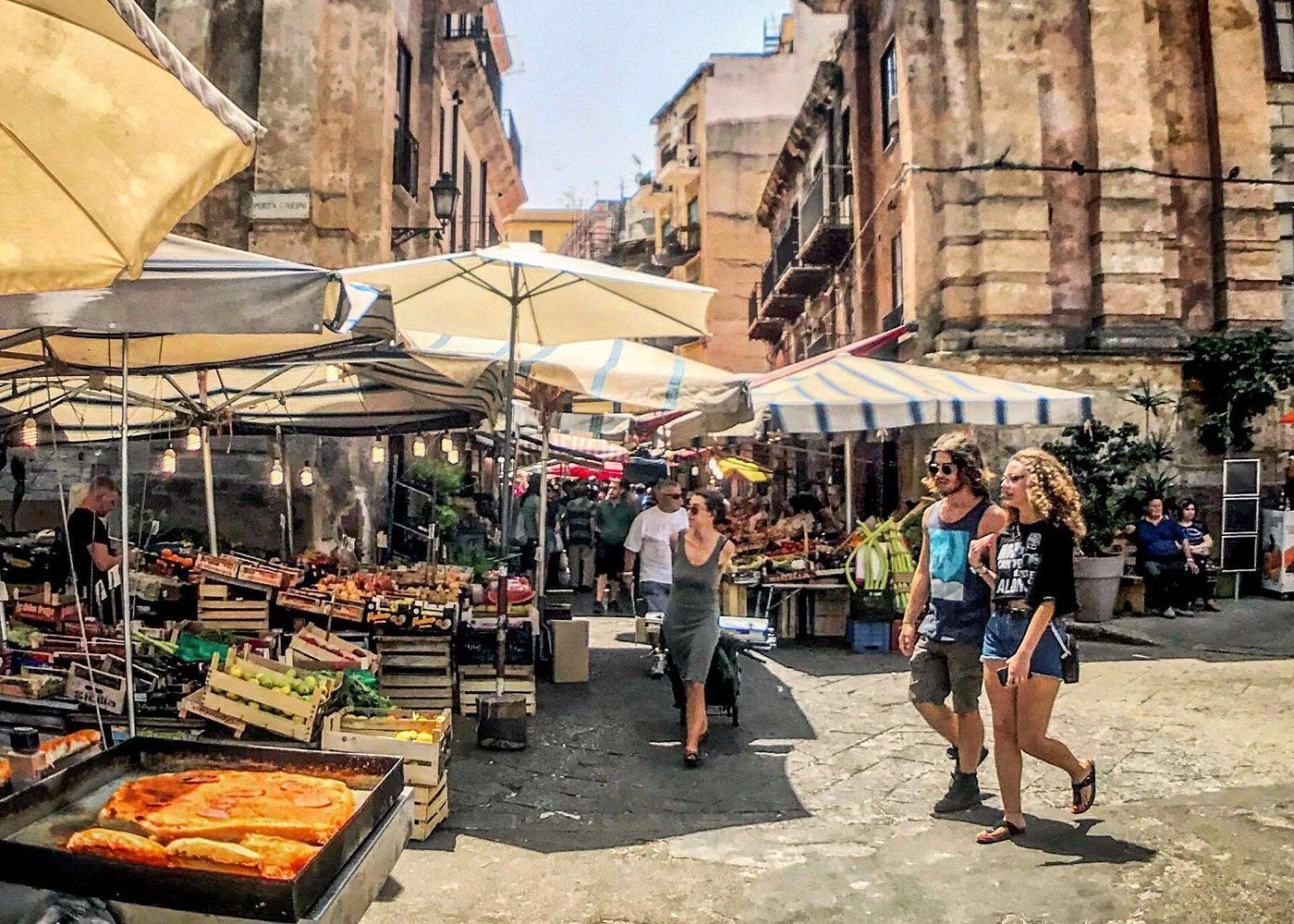
The floor of the range at $40 — the same city, the same canon, and a bigger group at the counters.
From $39 per person
Check Availability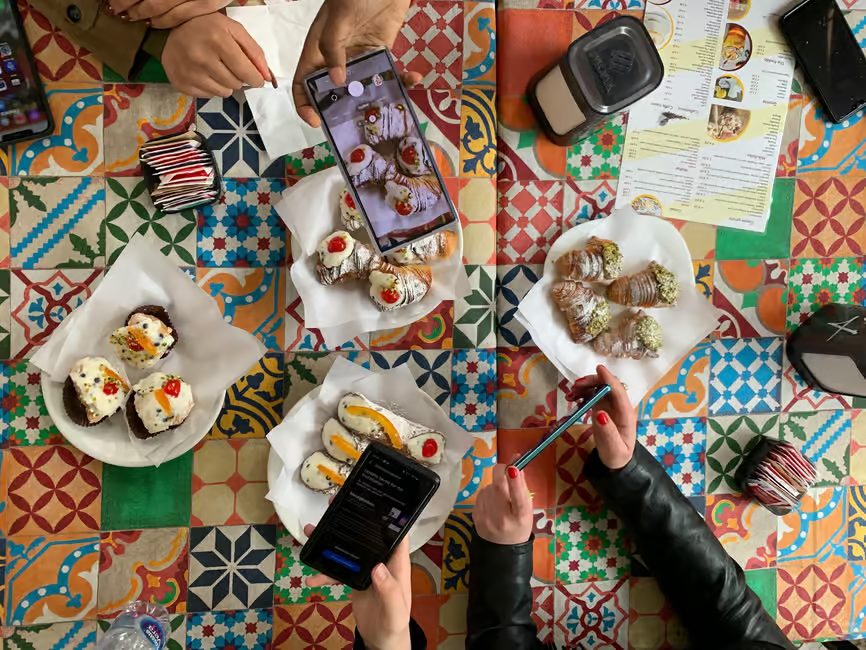
Palermo: Street Food and Local Market Tasting Tour
The small-group market and street-food tour, which is where the thirty-dollar upgrade actually lands.
From $78 per person
Check Availability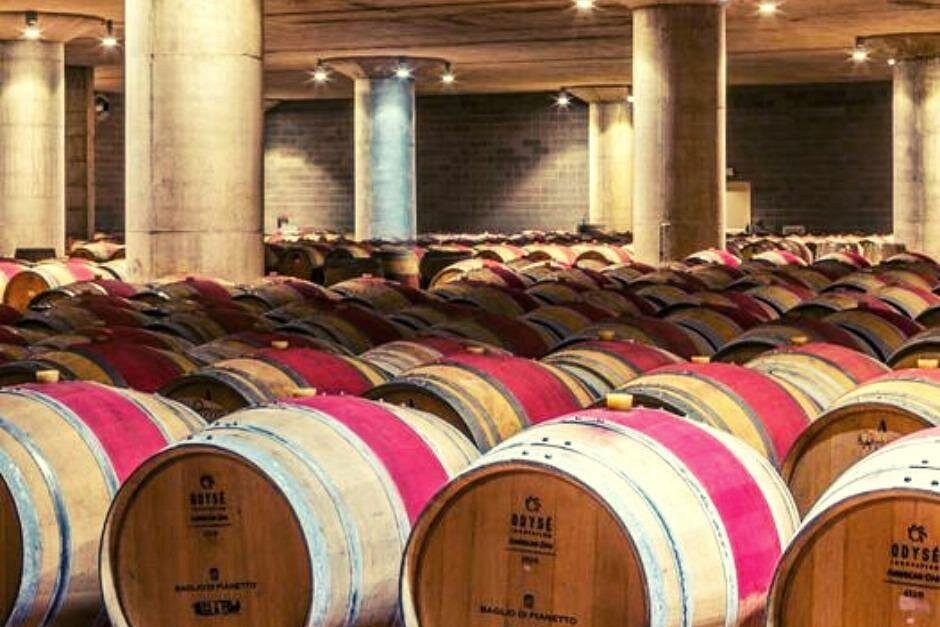
Sicilian Winery Tour with Wine Tasting from Palermo
The $251 winery day, listed here so it is clear what it is: a trip out of Palermo, not a tour of it.
From $251 per person
Check Availability