Three Hours, Six Stops: How a Palermo Food Tour Is Built
The listings tell you what you will eat and not how the three hours are shaped. Here is the route, the order, the walking distance and the portion arithmetic — including the answer to the question everybody asks afterwards, which is whether it replaces dinner.
In this guide
The shape of a tour
Almost every Palermo street-food tour follows the same arc, because the food itself dictates it: savoury and fried first, the markets in the middle, the challenging thing around stop four, and something sweet at the end.
That is not laziness. It is the order the food works in — you cannot open with a cannolo and you cannot close with a spleen sandwich — and every guide in the city has arrived at roughly the same sequence.
What varies between listings is the route between the stops, how long you spend in the markets, and how hard the guide pushes the adventurous end.
The three hours, timed
An afternoon street-food walk with six stops, in a small group.
| Time | Where | How long | What is happening |
|---|---|---|---|
| 16:00 | Meeting point | 10 min | Group forms; the guide sets expectations about quantity |
| 16:10 | Stop 1 — a friggitoria | 20 min | Pane e panelle and crocchè, standing up |
| 16:30 | Walking | 10 min | Through the old quarter; the guide reads the streets |
| 16:40 | Stop 2 — arancine | 20 min | The fried rice ball, and the Palermo-Catania argument |
| 17:00 | Into the market | 15 min | Ballarò, the Vucciria or the Capo, depending on the operator |
| 17:15 | Stop 3 — market tasting | 25 min | Cheese, olives, whatever is in season |
| 17:40 | Stop 4 — sfincione | 15 min | The onion-and-anchovy focaccia, from a cart if you are lucky |
| 17:55 | Stop 5 — the brave one | 20 min | Usually pani ca meusa; declining is fine |
| 18:15 | Walking | 10 min | Toward the centre and the pastry |
| 18:25 | Stop 6 — cannoli | 25 min | Filled to order, which is the whole point |
| 18:50 | Finish | — | Roughly three hours, and you will not want dinner |
Six stops, about forty minutes of walking, and around two hours of eating and standing. That ratio is the product.
Where do they start?
Almost always somewhere central and findable — a piazza, a fountain, a recognisable corner — rather than at a restaurant.
Common starting points cluster around the Quattro Canti, the Teatro Massimo and the edges of the markets. The confirmation gives an exact spot and it is worth walking to it the day before if you are unsure, because Palermo’s old centre is a genuine maze and mapping apps struggle in the narrow streets.
Arrive ten minutes early. Groups leave on time and the first stop is usually a two-minute walk away.
The first two stops
Deliberately the easiest, and the guide is watching how the group handles them.
Pane e panelle comes first almost everywhere: chickpea-flour fritters in a soft roll, sometimes with crocchè, the potato croquettes, alongside. It is a workers’ food, it costs almost nothing at the counter, and it is the single most Palermitan thing you will eat.
Then arancine. Fried rice balls filled with ragù or with butter and ham, and the local insistence that the word is feminine here and masculine in Catania is a genuine cultural fault line rather than a joke for tourists.
Both are substantial. If you have eaten lunch you will feel it by stop three.
Through the markets
The middle of every tour, and the part people photograph.
Palermo has three historic markets and operators split between them. Ballarò is the largest and most working; the Vucciria is the most famous and has become as much a nightlife district as a market; the Capo is the tightest and most theatrical, with the vendors’ calls that give Palermo markets their reputation.
What a guide does here is translate. The fish counters and what is in season, the vegetable stalls, the spices that came with the Arab period and never left, and the reason a Sicilian market looks more like a North African souk than like a market in Milan.
Twenty-five minutes is typical, and it is where the questions get asked.
The stop that tests you
Usually stop five, and usually pani ca meusa — a roll filled with slices of veal spleen and lung, cooked in lard, served either schietta (plain) or maritata (married, with ricotta and caciocavallo).
It is a genuinely old Palermo food with a documented history, it is delicious to a good number of people who expected not to like it, and it is entirely reasonable to decline. Guides expect some of the group to pass and nobody makes a thing of it.
If you want to try it, take it maritata. The cheese does a lot of work.
The sweet finish
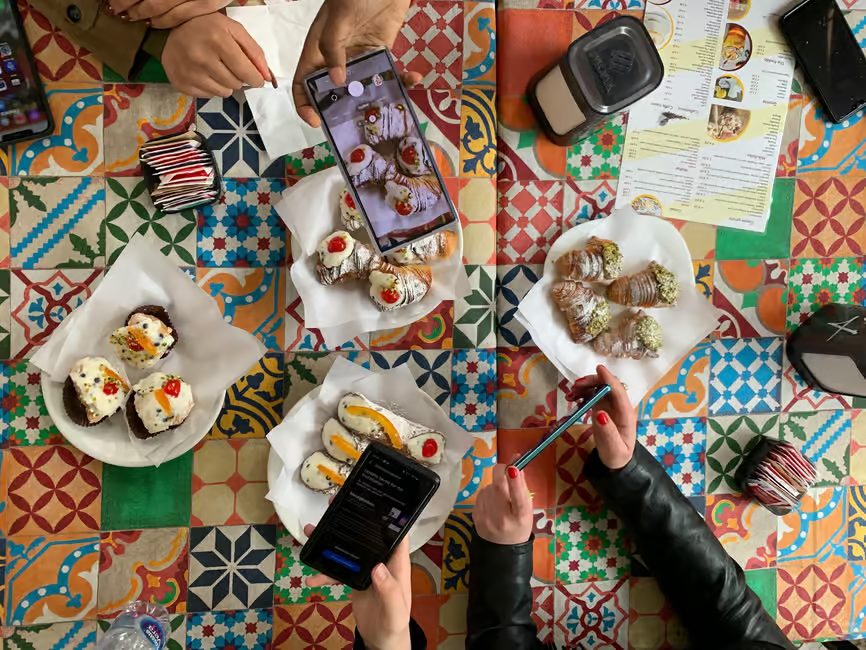
Cannoli, and the detail that matters is that they should be filled in front of you.
A cannolo filled in advance goes soft, and a soft shell is the difference between the pastry Sicily is famous for and a disappointment. Good tours end somewhere that fills to order, and a guide will usually point out why that matters.
Some tours substitute or add cassata, gelo di mellone in season, or granita with brioche in summer. All are legitimate Palermo sweets and all are a fine way to finish.
How far do you walk?
Two to three kilometres over three hours, in short stretches between stops, on old paving.
That is not a hike, and it is more than people expect from something described as a food tour. The surface is the real consideration: Palermo’s historic centre is cobbles, worn stone and uneven pavements, and sandals with no support make three hours longer than they need to be.
- Shoes: closed and comfortable. This is the single most repeated piece of advice in the reviews.
- Shade: limited in the narrow streets, plentiful in the markets, absent in the piazzas.
- Water: carry some in summer. The food is salty and fried and the walking is constant.
- Pace: gentle. Nobody is rushing between stops.
Does it replace dinner?
Yes, comprehensively, and this is the question every review answers and no listing does.
Six substantial tastings across three hours, most of them fried, is a meal by any measure. The people who book a restaurant for eight o’clock after a five o’clock tour do not eat it.
Plan the day around it: light breakfast, no lunch or a very small one, and nothing booked afterwards. A walk and a drink is the right evening, not a table.
The listings that state a tasting count are the honest ones. “10+ tastings” on one of these means exactly that, and it is a lot of food.
What do you drink?
Varies more than the food, and it is worth checking the inclusions.
Most daytime street-food tours include something at some stops — a beer with the panelle, a glass of wine at the market, water throughout — and a few include nothing beyond water. The evening tours are built around wine and say so.
The local drinks worth trying: Sicilian beer with fried food, which is the pairing the city actually uses; a glass of Nero d’Avola or Grillo; and in summer, a granita al limone, which is not a drink exactly and is the correct answer to a hot afternoon.
How the evening version differs
Three things change, and together they make it a different product.
The markets close, so an evening tour cannot include them and does not try. What it includes instead is the same streets in their evening use, which in the Vucciria means a district that fills with people drinking outside from about nine.
More of it is seated. Evening tours build in proper stops with tables, which suits a slower pace and more wine.
And it genuinely is dinner. A daytime tour replaces dinner by accident; an evening tour replaces it on purpose, which is easier to plan around.
Where to go afterwards
Nowhere for food, and that is the point. What a tour gives you is a map for the rest of the week.
- Go back to the markets in the morning. Ballarò and the Capo are working markets and the eight o’clock version is different from the four o’clock one.
- Return to the stop you liked. Every good guide names the places, and the counters are open to anybody at ordinary prices.
- The Vucciria after dark. If your tour was in the afternoon, the same square at ten at night is a different city.
- A granita and brioche for breakfast. The single most Sicilian meal available and nobody puts it on a tour.
That is the real return on a food tour in this city: three hours that make the following four days better.
Common questions
How long is a Palermo street food tour?
Does a Palermo food tour replace dinner?
How far do you walk?
Do I have to eat the spleen sandwich?
Can vegetarians do a Palermo food tour?
Are drinks included?
Where to go next
- Which format — the decision this route assumes you made
- Before you pay — dietary needs, group size and language
- The markets — Ballarò, the Vucciria and the Capo
- Where to eat — the places to go back to
- Compare Palermo food tours — every walk, market and cooking class, side by side
Tours that fit this trip
Chosen to match what this guide covers, not for what sells.
Palermo Food Tour: 10+ Tastings of Arancini, Cannoli, Wine & More
The listing that states its tasting count plainly — ten or more, which is the honest way to describe how much food three hours contains.
From $87 per person
Check Availability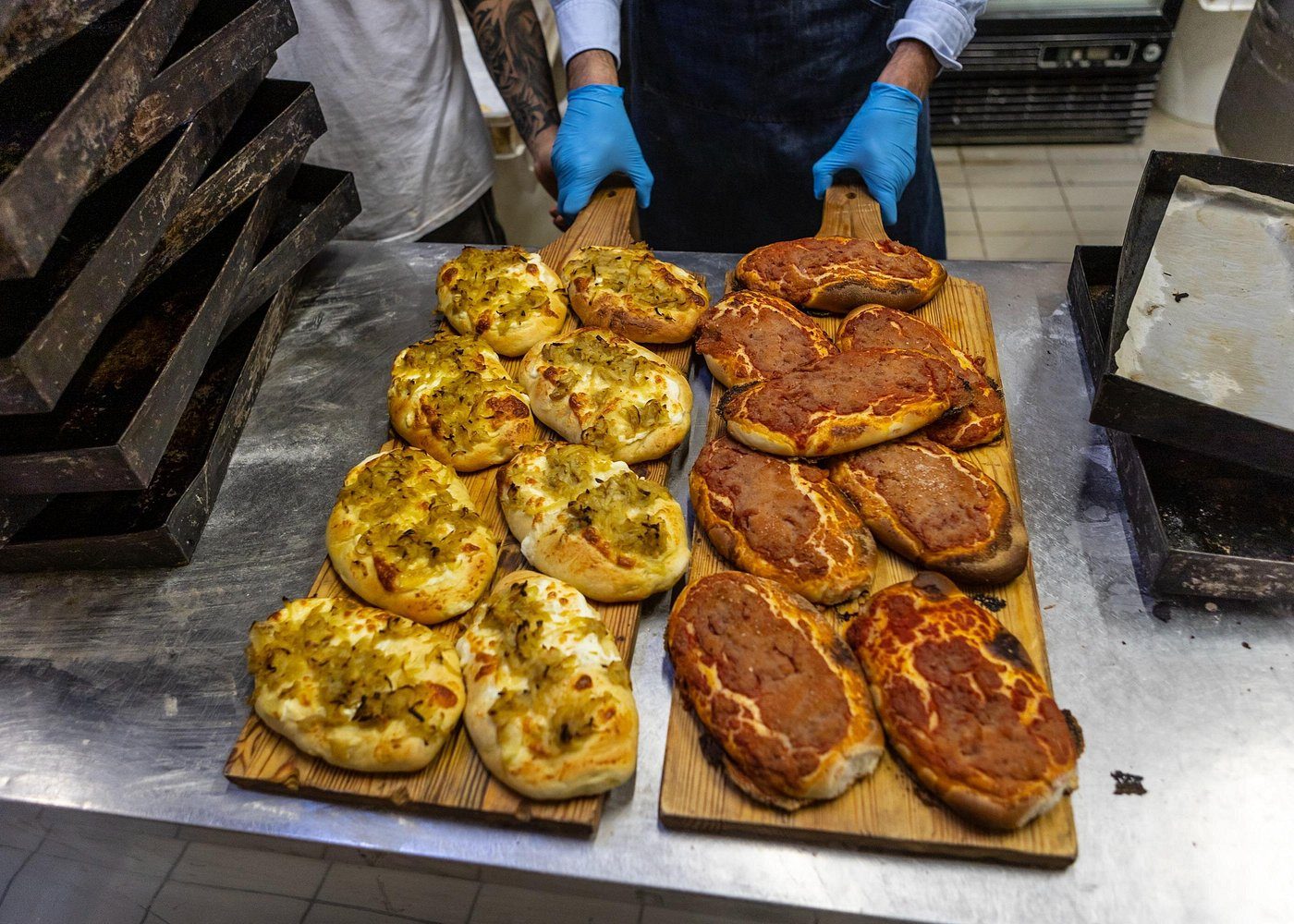
Palermo Ballaro Market & Street Food Tour by Eating Europe
A tour anchored on Ballarò, for readers who want the market half of the route to be the substance rather than a stop.
From $74 per person
Check Availability
Palermo: Small Group Night Street Food Tour
The night version of the same walk, when the markets are shut and the streets are in their evening use.
From $78 per person
Check Availability