Palermo’s Food Calendar: The Festino, the Sagre and What Closes in August
Sicilian cooking is seasonal in a way that a year-round tour listing cannot show you, and the city’s calendar closes as much as it opens. Here is the year: what is on the market counters, which festivals are worth planning around, and the August fortnight that surprises people.
In this guide
Two calendars at once
Palermo runs on two overlapping seasonal cycles and they do not line up.
The first is agricultural: what is on the market counters, which changes month by month and is the reason a market tour in April is a different tour from the same route in October.
The second is civic and religious: the Festino in July, the saints’ days, the sagre in the towns around the city, and the August pause when a good part of Italy stops working.
Food tours run all year and none of them cancels for a season. What changes is what you eat, what is open around the stops, and how comfortable three hours on foot is.
The year, month by month
| Period | On the counters | Weather | Crowds | The read |
|---|---|---|---|---|
| January–February | Citrus at its peak; artichokes; broccoli | Cool, some rain | Lowest | The best oranges of the year and an empty city |
| March–April | Artichokes, wild greens, early fava | Mild, pleasant | Rising | Spring produce and comfortable walking — a strong window |
| May–June | Tomatoes arriving; stone fruit; courgettes | Warm | Building | Excellent balance of produce and weather |
| July | Tomatoes, aubergine, melon; the Festino | Hot | Peak | The city’s biggest festival, and its hardest walking |
| August | Peak summer produce; partial closures | Hottest | Peak, then a lull | Ferragosto week: check what is open |
| September | Grapes, figs, late tomatoes, aubergine | Warm, easing | Falling | Arguably the best month of the year here |
| October–November | Mushrooms, pumpkin, olives, new oil | Mild | Low | Harvest season; underrated for a food trip |
| December | Citrus returning; Christmas baking | Cool | Low | Sweets season, and the markets at their most festive |
September and October are the answer if the food is the point. February is the answer if the citrus is.
What is on the counters
The clearest seasonal difference is in the markets rather than the friggitorie, because fried street food is more or less constant and vegetables are not.
Winter is citrus. Sicilian blood oranges — Tarocco, Moro, Sanguinello — are at their best from about January, and they are genuinely unlike supermarket oranges anywhere else. Artichokes are the other winter star, and Palermo eats a great many of them.
Spring brings wild greens, fava beans and the first of the year’s tender vegetables. It is the quietest season on the stalls and the most delicate.
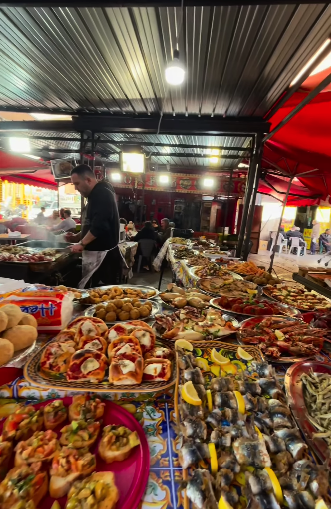
Summer is tomatoes and aubergine, which between them account for a large part of Sicilian cooking, plus melon, figs and stone fruit. This is when the markets look the way the photographs suggest.
Autumn is the harvest: grapes, olives and the new oil, mushrooms, pumpkin. For anybody interested in ingredients rather than dishes, it is the best time to be in a Palermo market.
The Festino di Santa Rosalia
Palermo’s biggest festival, held in mid-July, and it takes over the city.
It honours Santa Rosalia, the city’s patron, whose intercession is credited with ending the plague of 1624, and it culminates in a procession along the Cassaro to the sea with the saint’s float, followed by fireworks. Hundreds of thousands of people come.
What it means for food: the street-food stalls multiply, the traditional festival foods appear — babbaluci, the small snails eaten with garlic and parsley, are the Festino dish — and the city eats outdoors en masse.
What it means for a tour: routes change, some regular stops are inaccessible, and operators reroute rather than cancel. If your dates cross it, ask what the route will be rather than assuming the standard one.
The sagre
Food festivals in the towns around Palermo, usually devoted to a single ingredient, and mostly running from late spring through autumn.
They are village affairs rather than tourist events: a town square, trestle tables, one product done many ways, and a great deal of eating. Bread, ricotta, sausage, wine, cactus fruit and chestnuts all have their sagre somewhere in the province.
None of them is on a city food-tour itinerary and none needs to be. What they are is an excellent reason to have a car for a day in September or October, and a guide on a food tour is exactly the person to ask what is on that week.
What actually closes in August?
Less than the reputation suggests, and enough to matter.
The Italian institution of ferragosto centres on 15 August, and the week around it is when a good proportion of the country takes its holiday. In Palermo the effect is uneven: the tourist economy stays open because that is when the tourists are there, and family-run businesses that serve locals often close for two weeks.
Which means: food tours run, the markets operate, the main friggitorie stay open, and some of the specific counters a guide would normally take you to are shut. Operators know which and reroute.
What is more likely to be closed is the restaurant you read about, the particular bakery somebody recommended, and the small places away from the centre. If you are in Palermo in mid-August, take the tour and lower your expectations about independent dining that week.
How hot does it get?
Hot enough to change which tour you book.
July and August regularly run into the mid-thirties Celsius, and Palermo’s old centre is stone, narrow and largely without breeze. Three hours on foot eating fried food in that is genuinely demanding, and the reviews from summer afternoons say so.
Three responses, in order of usefulness: book an evening tour, book a morning one, or book a cooking class, which is mostly indoors. An evening tour in July is one of the best things available in this city; a two o’clock walking tour in July is not.
The shoulder months solve it entirely. Late September through November and March through May are comfortable at any hour.
Is winter worth it?
Genuinely, and it is the most underrated season here.
January and February bring the best citrus of the year, artichokes on every stall, mild weather that makes walking a pleasure, an empty city and low prices. The markets are working markets serving locals rather than performing for visitors.
The trade is daylight and the occasional wet day, neither of which much affects a food tour whose stops are counters and covered markets. Some operators run reduced winter schedules, so there are fewer departures to choose from.
For a food-focused trip on a budget, February in Palermo is one of the better propositions in Europe.
The sweets have their own calendar
Sicilian pastry is tied to the religious year more tightly than the savoury food is, and it is worth knowing what falls when.
- Cannoli: year-round now, though historically a Carnival sweet. Always filled to order.
- Cassata: associated with Easter, available more widely, and at its best in spring.
- Frutta martorana: marzipan shaped and painted as fruit, made for All Souls at the start of November and sold around it.
- Buccellato: the ring-shaped fig-filled Christmas cake, in the bakeries through December.
- Sfincia di San Giuseppe: the ricotta-filled fritter for Saint Joseph’s day, 19 March, and one of the best things in Sicilian baking.
A tour in the right week gets you one of the seasonal ones, and a guide will point you at the bakery for it.
Do the markets change through the year?
Substantially, and it is the strongest argument for a market tour over a pure street-food walk if you are here in a good produce month.
Ballarò, the Vucciria and the Capo all work year-round and none of them closes seasonally. What changes is the stalls: citrus and artichokes fill the winter counters, tomatoes and aubergine take over in summer, and the autumn brings olives, new oil and mushrooms.
The fish is the constant, and it is worth looking at in any month: swordfish, tuna, sardines and whatever came in that morning, laid out in a way that is a large part of why these markets are famous.
Mornings are when they work. A tour that reaches the market at nine sees something different from one arriving at five, and both are worth seeing.
How far ahead should you book?
| When | Small group | Larger group | Why |
|---|---|---|---|
| Festino week, mid-July | 3–4 weeks | 2 weeks | The city fills; routes change |
| July–August | 2–3 weeks | 1 week | Peak season, and evening slots go first |
| May–June, September | 1–2 weeks | A few days | Comfortable margin |
| October, April | A few days | The day before | Rarely tight |
| November–March | The day before | Same day, often | Reduced schedules but plenty of space |
Evening departures in high summer are the tightest thing to book here, because everybody arrives at the same conclusion about the heat.
The short verdict
September, then October. Warm without being punishing, the harvest on the market counters, the summer crowds gone, and every format comfortable at any hour.
February is the contrarian answer and a good one: the best citrus in Europe, artichokes everywhere, an empty city and low prices, with only reduced departure choice against it.
And if you are here in July, either plan around the Festino deliberately or book either side of it — and take an evening tour rather than an afternoon one. That single change is the difference between a hard three hours and one of the best evenings this city offers.
Common questions
What is the best month for a Palermo food tour?
What is the Festino di Santa Rosalia?
Does Palermo close in August?
Is it too hot for a food tour in July?
What produce is in season when?
Do the markets change through the year?
Where to go next
- Which format — which one suits the month you are here
- Three hours, six stops — the route the season changes
- Food events — the festival calendar in detail
- The markets — what is on the counters and when
- Compare Palermo food tours — every walk, market and cooking class, side by side
Tours that fit this trip
Chosen to match what this guide covers, not for what sells.
Palermo: Mafia history and present, Street Food Walking Tour
A tour that pairs the food with the city’s civic history — which is the other calendar Palermo runs on.
From $77 per person
Check Availability
Palermo on a plate: Traditional Food & Wine tour (All-Inclusive)
A four-hour food and wine tour, best in autumn when the new oil and the harvest are on the counters.
From $103 per person
Check Availability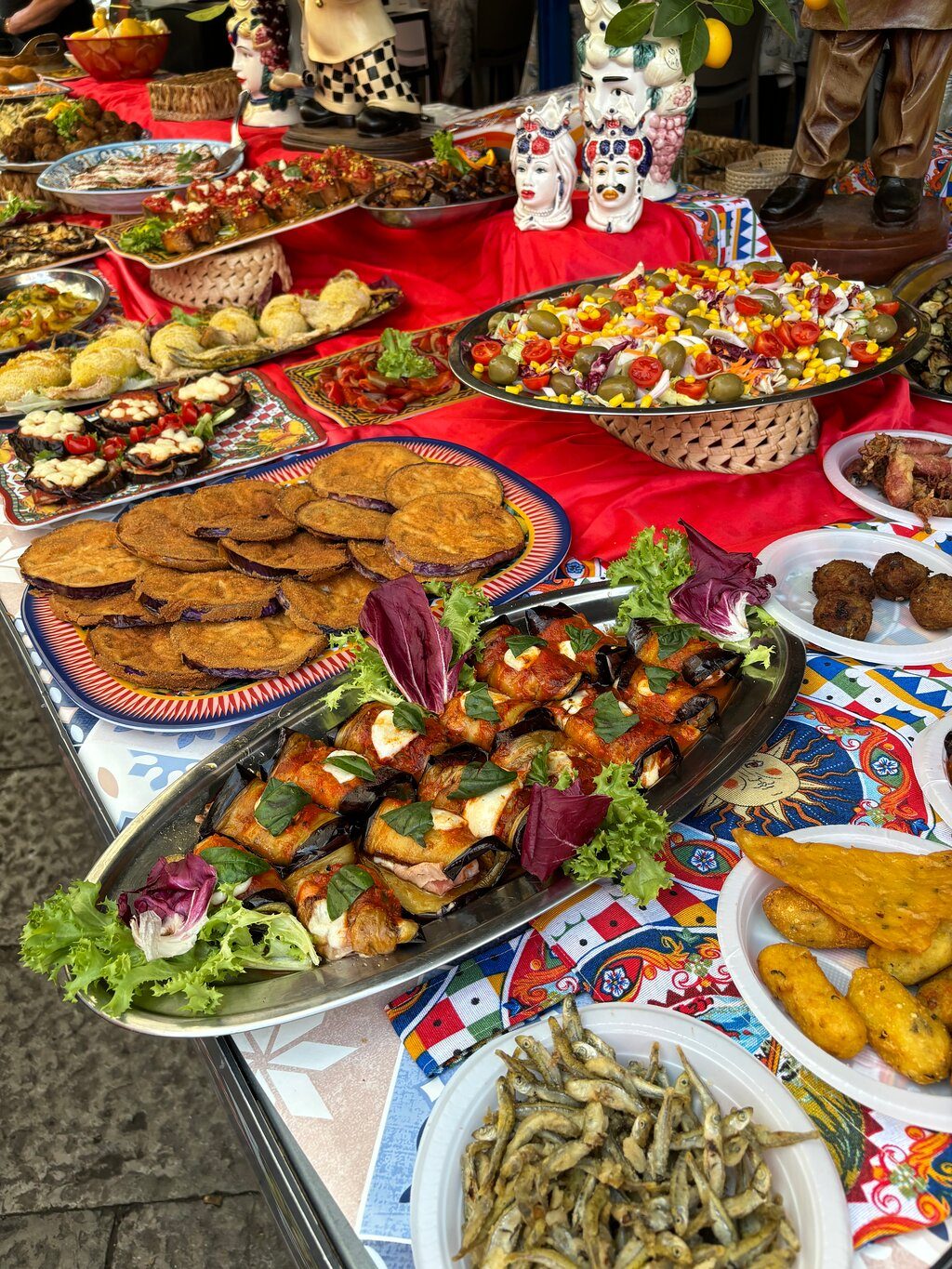
Walking Tour and street food Tour Palermo / History and Food
A walking and street-food tour with the history threaded through, and a good option in the cooler months when three hours on foot is a pleasure.
From $58 per person
Check Availability