Why Palermo's Street Food Is Among Europe's Oldest
Palermo's street food isn't a modern trend — it's a thousand-year inheritance. Here's where the city's most famous dishes actually come from.
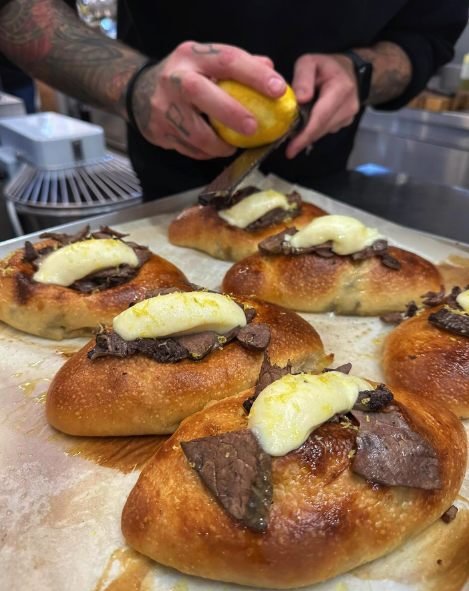
Palermo is often called one of the oldest street-food cities in Europe, and the claim holds up. Its food is a layered inheritance from the peoples who ruled Sicily — Phoenicians, Greeks, Romans, Arabs, Normans and Spanish — combined with centuries of cucina povera, the resourceful cooking of the poor that turned cheap and leftover ingredients into the city's signature dishes. Eat a Palermo street-food tour and you are, quite literally, tasting that history.
The Arab foundation
The single biggest influence arrived with Arab rule in the 9th and 10th centuries. The Arabs brought rice, saffron, citrus, sugar cane, almonds, aubergines and new frying and preserving techniques to Sicily, and much of Palermo's food traces directly back to them. Arancine descend from Arab saffron rice; panelle come from the chickpea-flour cooking of North Africa; and many of the island's sweets, including the ancestor of cassata, are Arab in origin. The markets themselves, with their singing vendors and souk-like layout, are an Arab legacy too — which is why the Capo and Ballaro feel unlike any market on the Italian mainland.
Norman and Spanish layers
The Normans, who took Sicily in the 11th century, layered their own tastes on top without erasing what came before — the same fusion you can still see in the Arab-Norman architecture of the Palatine Chapel and the Cathedral, both UNESCO World Heritage sites. Later Spanish rule, under the Crown of Aragon and then the Spanish Empire, added ingredients from the New World, including the tomato that now tops sfincione and dresses so much Sicilian cooking. Each ruler left something on the plate, and none of it was thrown away.
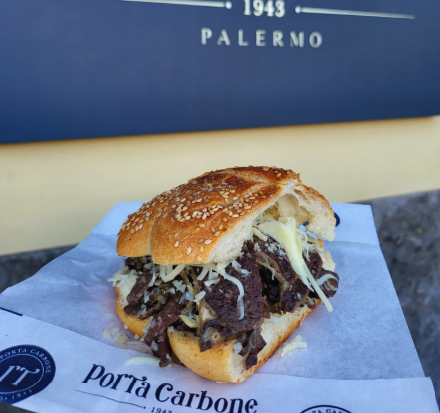
Cucina povera in one bite: cheap cuts, a sesame roll, and centuries of practice.
Food born of poverty
Many of Palermo's most famous street foods are cucina povera — dishes built from what richer households threw away. Pani ca meusa, the spleen sandwich, is thought to trace to the city's medieval Jewish butchers, who were paid in offal rather than coin and turned it into something worth queuing for. Frittola and stigghiola likewise turn the cheapest cuts into crave-worthy snacks. Nothing was wasted, and that thrift is exactly what makes the food distinctive today: it was invented to feed a dense, poor, working city cheaply, on the move, and it never needed to move indoors.
The sweet legacy of the convents
Palermo's sweets carry their own layer of history. The Arabs brought sugar cane, almonds and candied fruit; Sicily's convents then turned those ingredients into an art. For centuries, cloistered nuns were among the island's finest pastry makers, and dishes like cassata, frutta martorana (marzipan shaped and painted as fruit) and the fried, ricotta-filled cannolo trace back to convent and monastery kitchens. Martorana fruit takes its name from the Martorana convent in Palermo, whose nuns are said to have hung marzipan fruit in the trees to greet a visiting archbishop.
That is why the city's pastry counters feel like small museums, and why a cannolo filled to order in Palermo tastes of more than ricotta and sugar. The same layered inheritance that shaped the savoury food — Arab technique, local ingredients, centuries of practice — runs through the sweets, which is why any honest food tour finishes on something from the bakery.
Why it survived on the street
In a city that was long poor and densely packed, food had to be cheap, portable and eaten standing up — so it stayed on the street rather than moving into restaurants. The friggitorie and market stalls that fry panelle and arancine today are the direct descendants of that economy, and many recipes have passed down through the same families and neighbourhoods for generations. That continuity is why Palermo's street food feels less like a scene and more like a living tradition. To see where it all happens, start with our guide to Palermo's markets.
Tasting the layers today
What makes Palermo unusual is that the history has not been smoothed away — you can still taste each layer distinctly. The saffron in an arancina and the sweetness threaded through savoury dishes are Arab; the tomato on the sfincione and the chocolate that sometimes finds its way into caponata are Spanish and, ultimately, from the New World; the sheer thrift of the offal dishes is medieval poverty made permanent. No single ruler erased the last, so the plate reads like a timeline. That is why locals are quick to correct anyone who calls the food simply Italian: it is Sicilian, and specifically Palermitano, shaped by a location at the crossroads of the Mediterranean that made the island a prize for every passing empire. Eat widely across a market and you are, without trying, working through a thousand years of that crossroads in an afternoon.
Eating the history
Take a single arancina as an example. The saffron rice is an Arab inheritance; the ragu filling reflects later European tastes; the deep-frying is the technique of a poor, crowded city that needed fast, filling, portable food. One cheap snack, eaten standing in a market lane, carries three separate chapters of the island's past at once — and nobody selling it thinks of it as historic, because to them it is simply lunch. That unbroken, everyday continuity is exactly what sets Palermo apart from cities where the old food has become a museum piece.
All of this is why a Palermo food tour is really a history tour with tastings. When you eat an arancina in the Ballaro or a spleen sandwich near the Vucciria, you're tasting the Arab rice trade, medieval poverty and a thousand years of layered rule at once. If you want the dishes themselves explained, our guide to the best street food to try runs through each one. And when you're ready to book, browse all the options on our Palermo street food tours page.
Palermo's kitchen is a museum you can eat. Understanding where the dishes come from doesn't just make them more interesting — it makes them taste better.